Designing a six-section flow from scratch
Designing a six-section flow from scratch
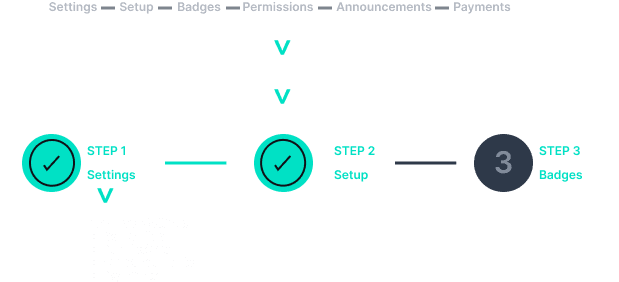
The event creation flow covered everything an organiser needed to set up a convention: basic details, multi-track scheduling, ticketing, role management, communications, and payments. Six sections, designed end-to-end, within a fixed design system I had no authority to change.
That constraint was useful. With no room for visual problem-solving, every decision had to live or die on information hierarchy and flow logic. I am sharing a Figma Make file of how I would have done it
Settings
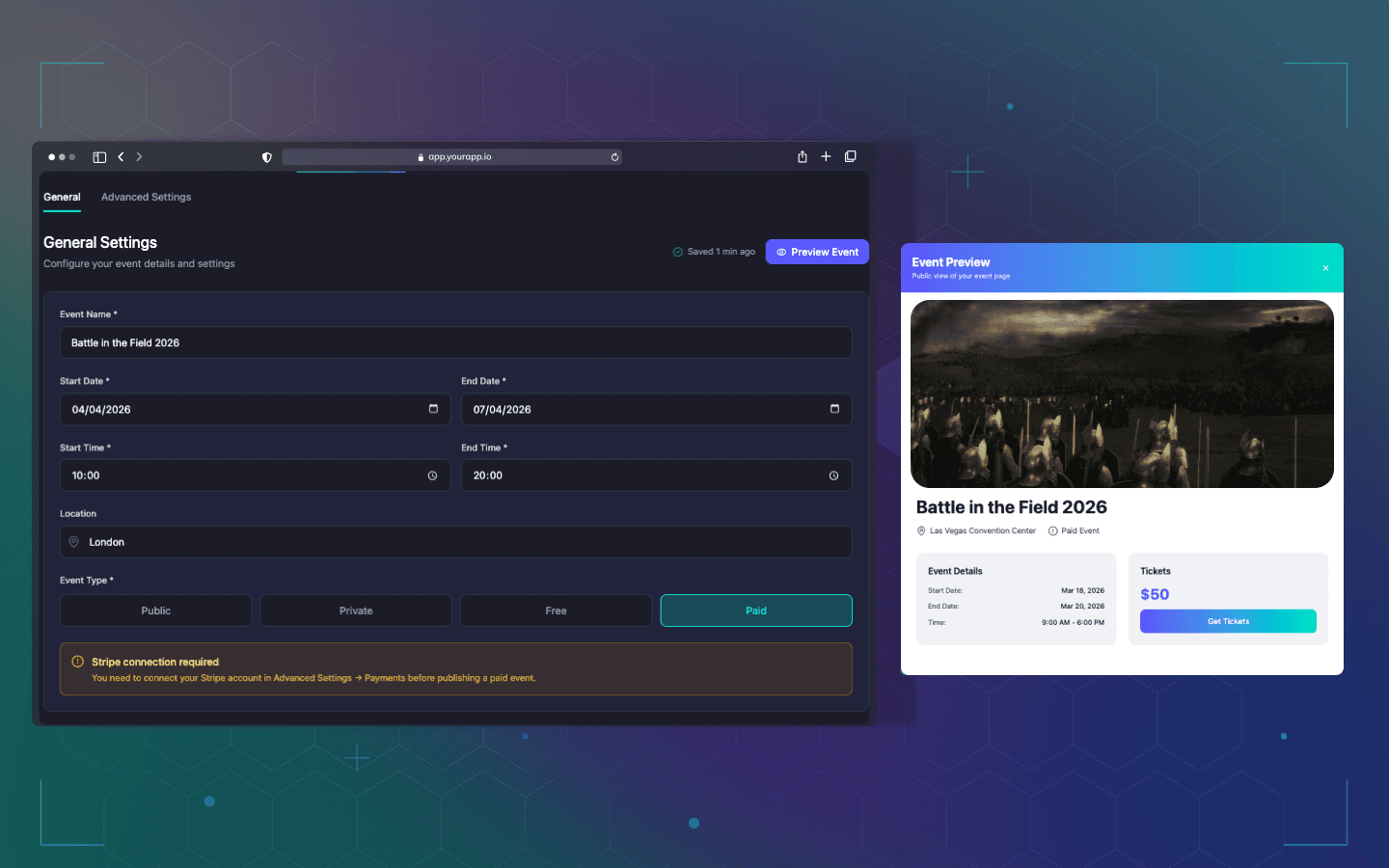
— the entry point. Event name, location, dates, capacity, description, logo, social links, terms. Required fields kept minimal and visually distinct from optional ones, with geo and dates prominently surfaced given their role in player discovery downstream.
Setup
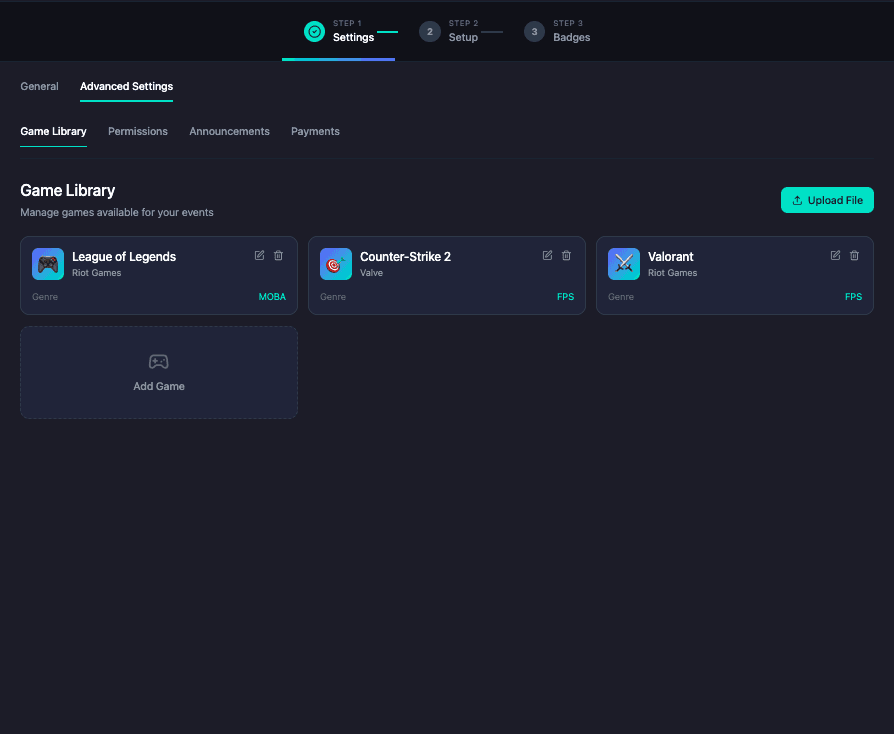
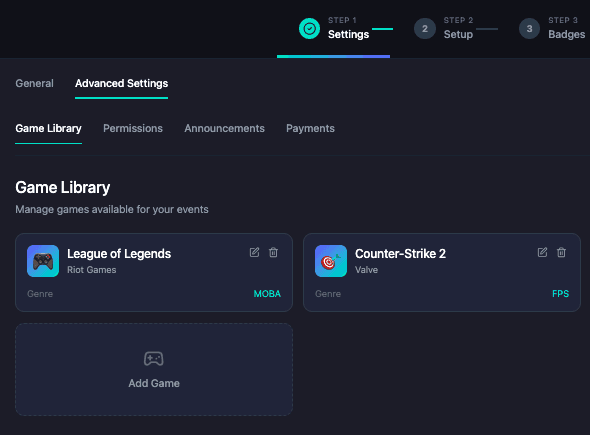
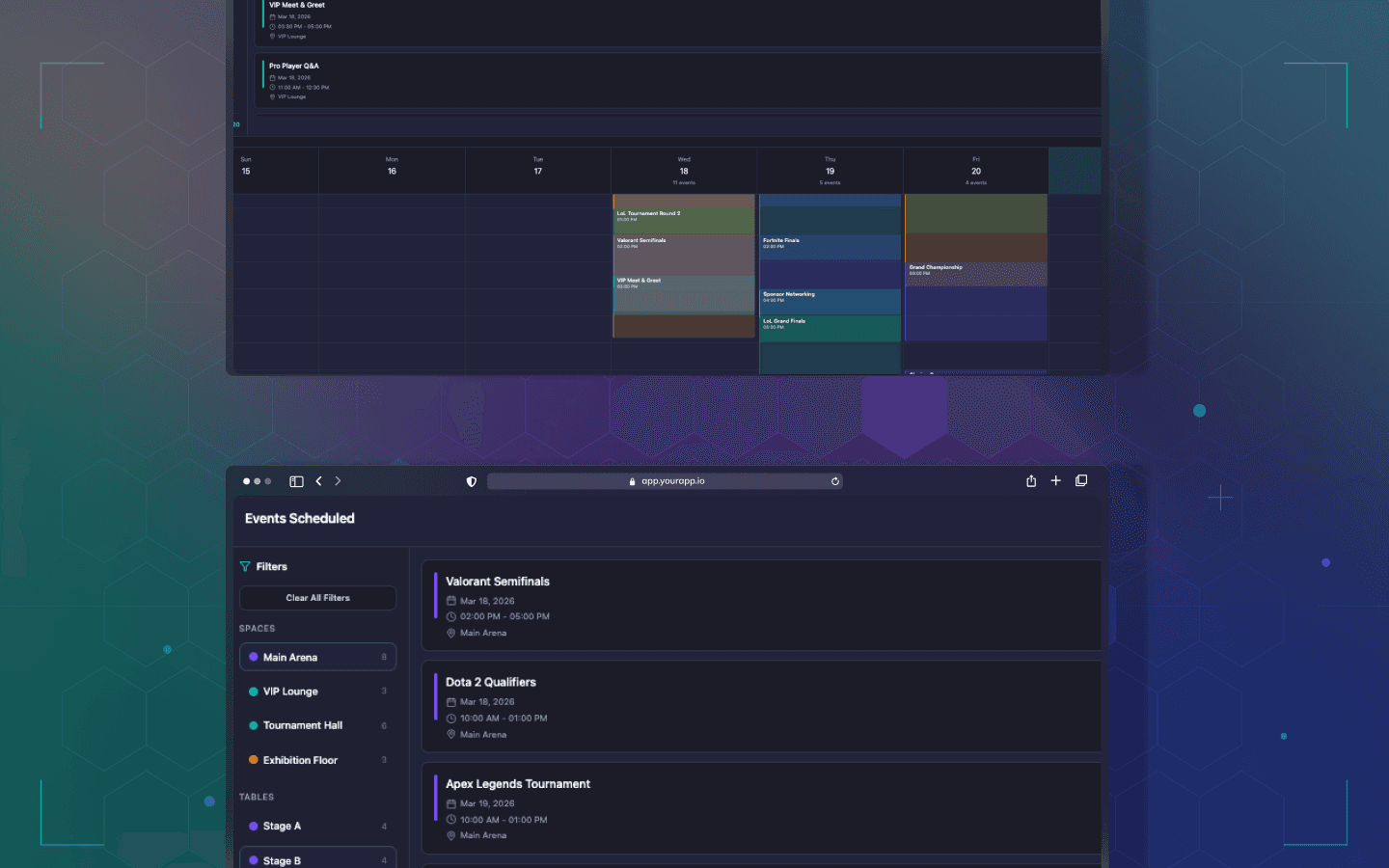
— the most complex section. Spaces, Tables, Game Library, Matches, and sub-events (workshops, seminars, tournaments). The Game Library integration let organisers pull directly from BoardGameGeek or the platform's own library — keeping the social layer useful rather than buried.
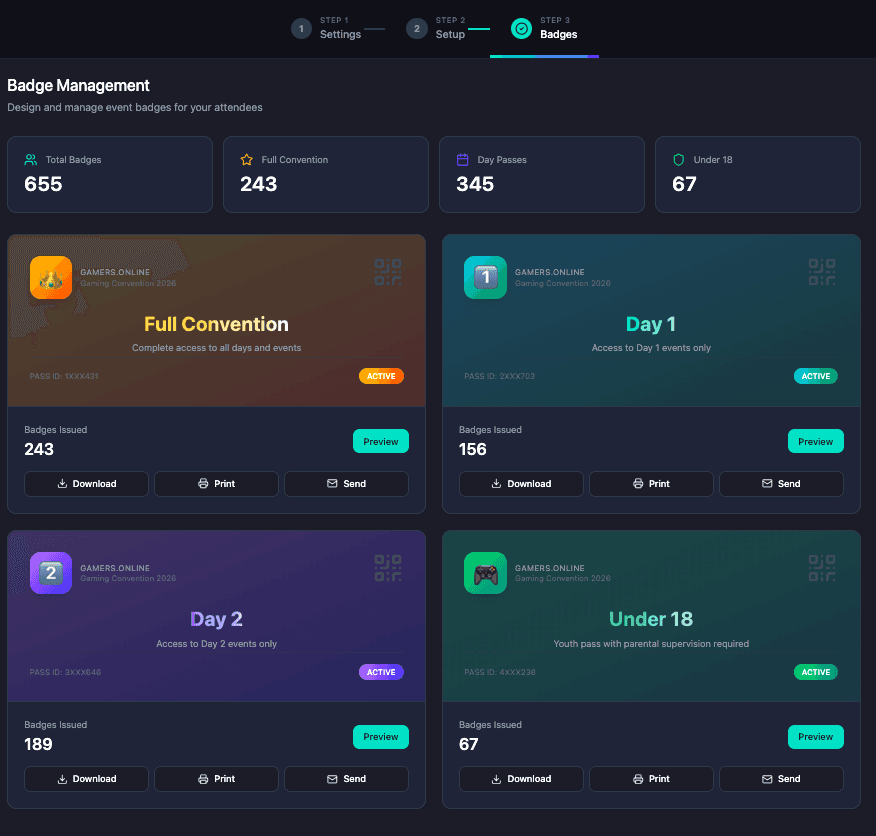
Badges
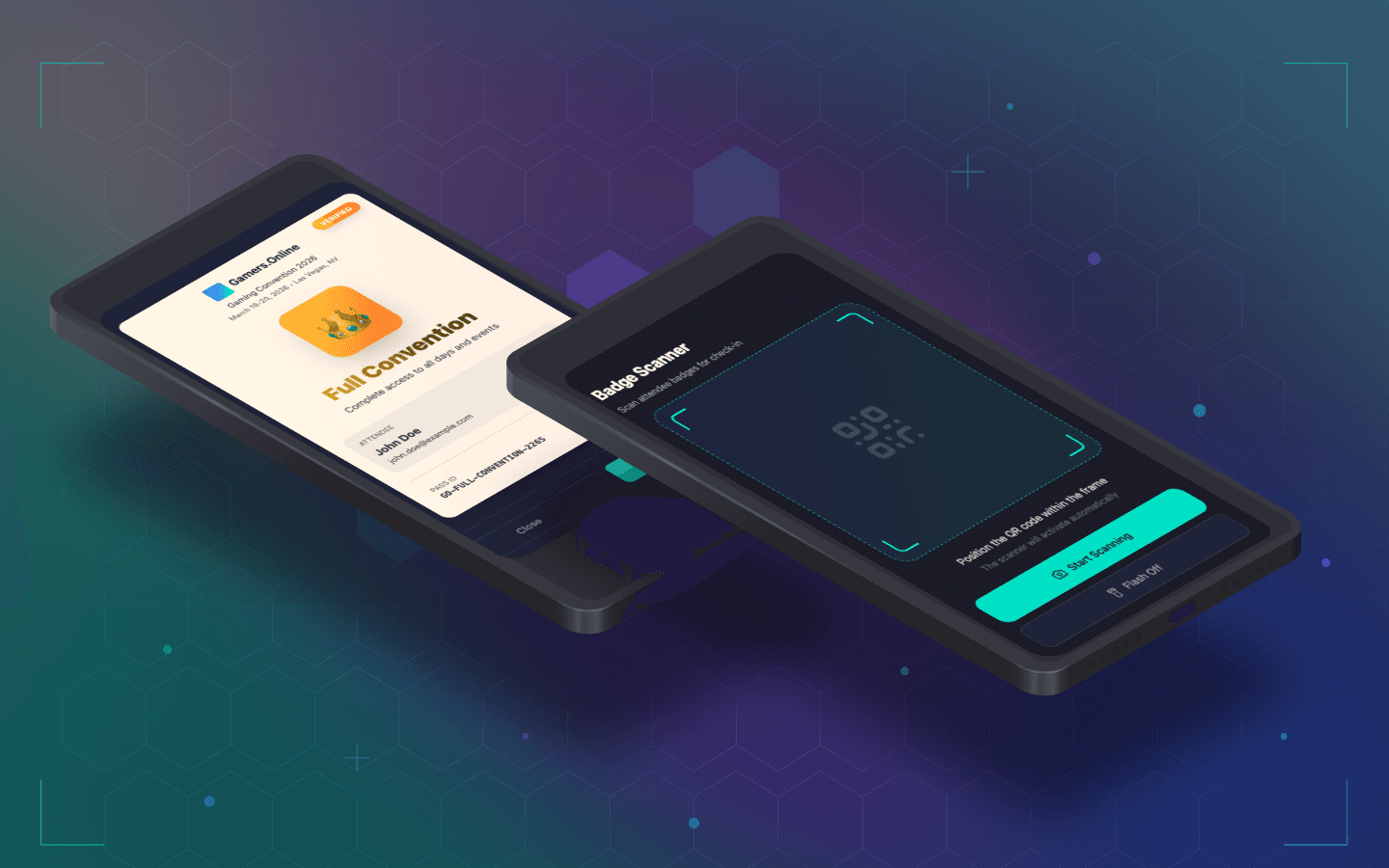
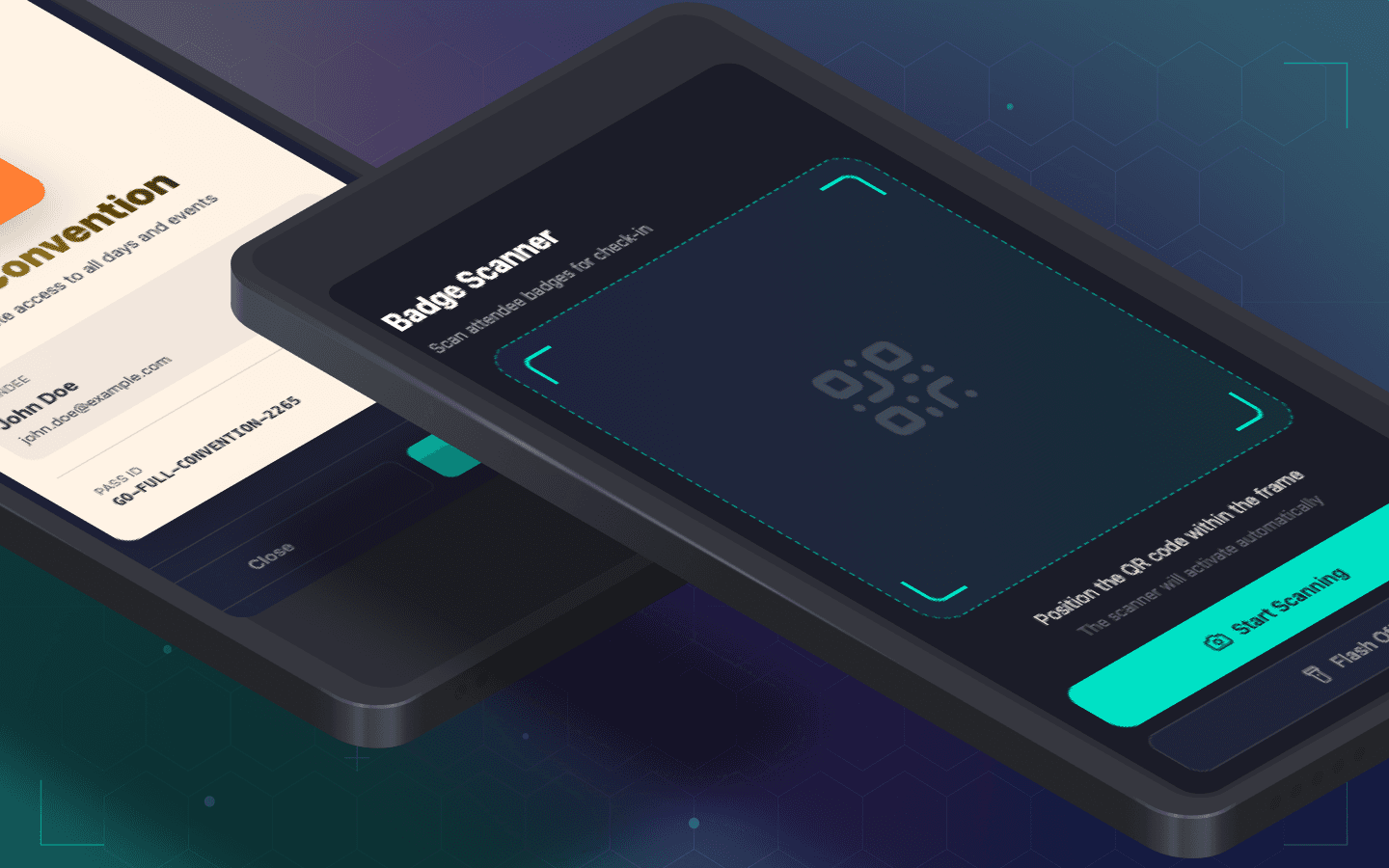
— ticketing with operational depth. Multiple pass types, individual pricing, availability limits, public/private visibility, and a live participant view showing sold, scanned, paid, and unpaid status. Not just a setup screen — an operational tool for the day of the event.
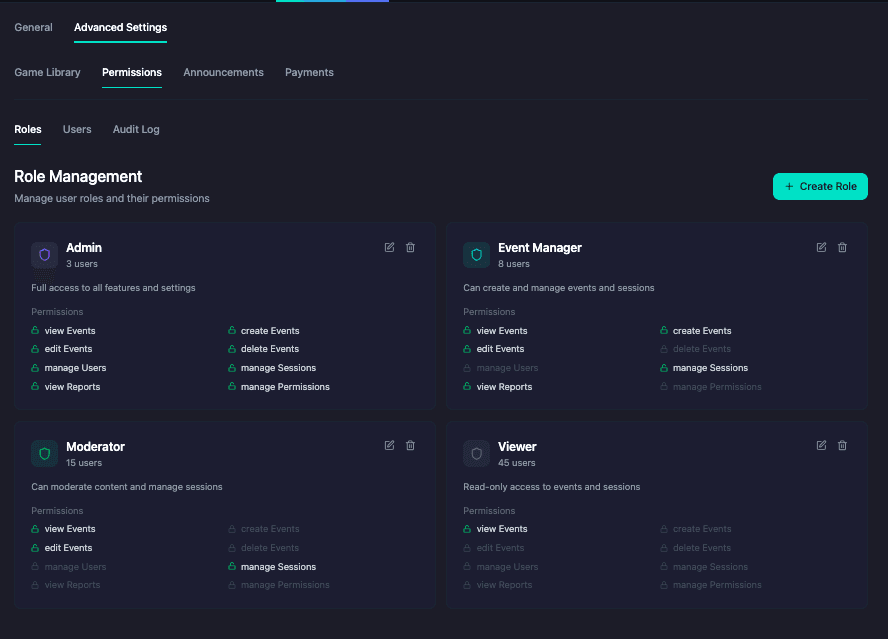
Permissions
— granular role management for event staff across ten permission types, with automatic expiry at convention end. One detail that mattered: removing the overhead of manually revoking access after every event.
— granular role management for event staff across ten permission types, with automatic expiry at convention end. One detail that mattered: removing the overhead of manually revoking access after every event.
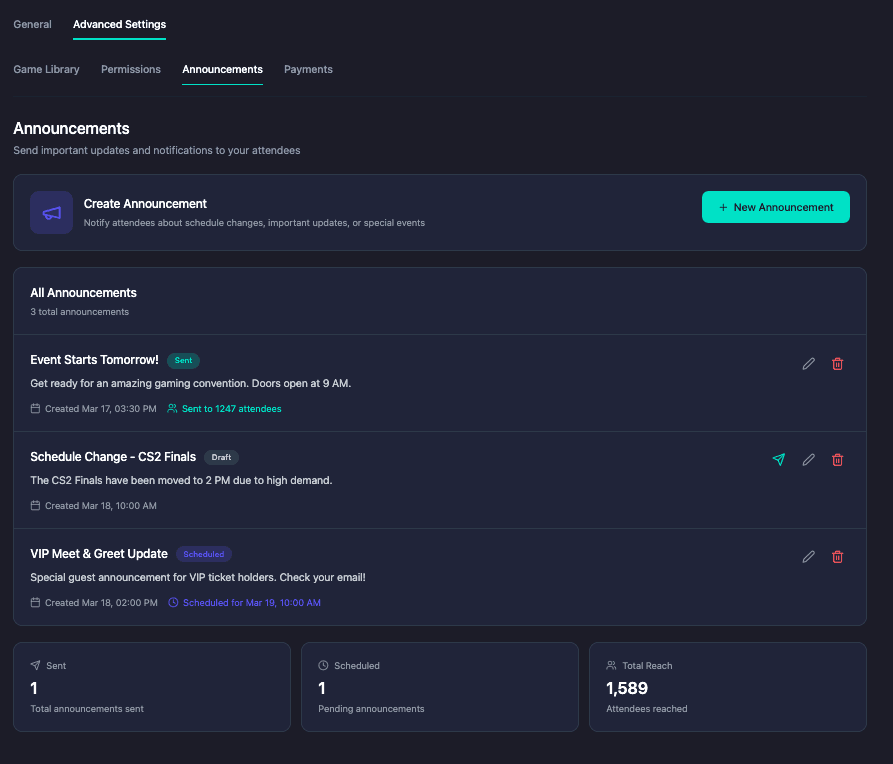
Announcements
— a direct messaging tool stripped to its essentials. Subject, audience, message, send. Designed for an organiser in the middle of running an event, not composing carefully from a desk.
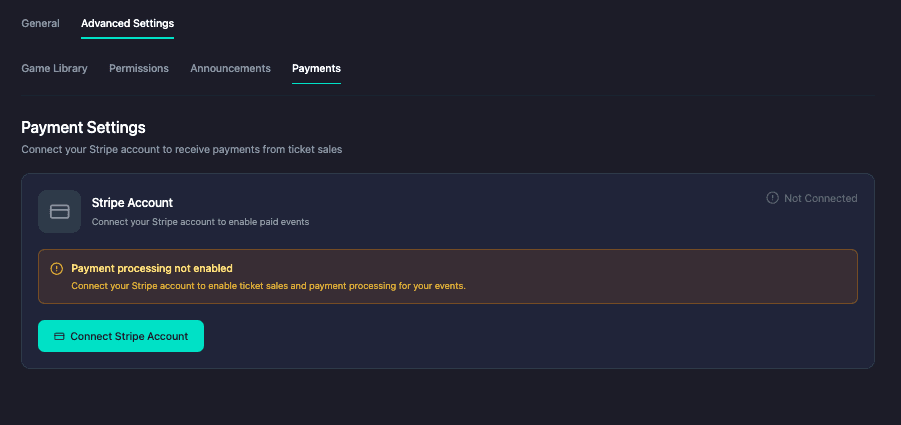
Payments
— the Stripe connection, placed deliberately last. Requiring financial setup as a gate to publishing kept early steps accessible while ensuring only committed organisers reached Publish — reducing incomplete test events cluttering the discovery feed.
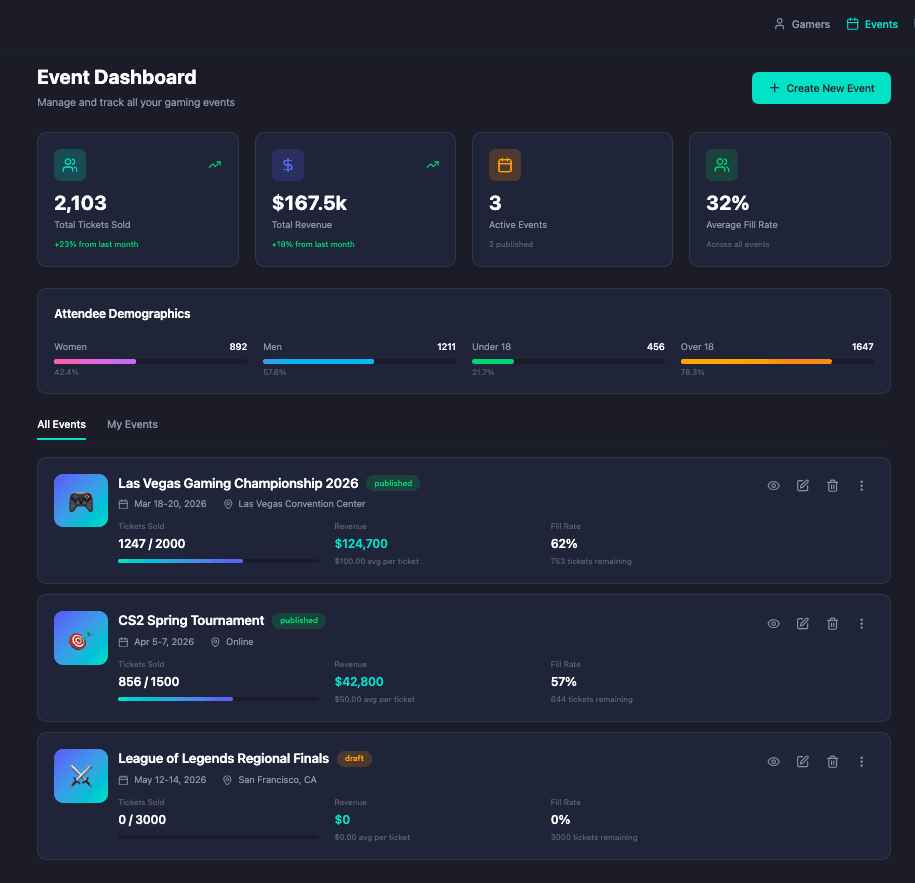
** The screens below are my own design exploration — built on the flows I designed, with the visual direction I would have proposed. **